

Chicago DBT Institute
Program Outcomes
2023-2024
General Information on Outcomes Data
The outcome data listed in this report includes data from individuals who were clients at Chicago DBT Institute between 2023 and 2024.
Treatment outcome research for our program has demonstrated that, for clients who elected to participate in outcomes research, six months of participation in services at CDBTI significantly reduced both difficulties with emotion regulation and symptoms of borderline personality disorder.
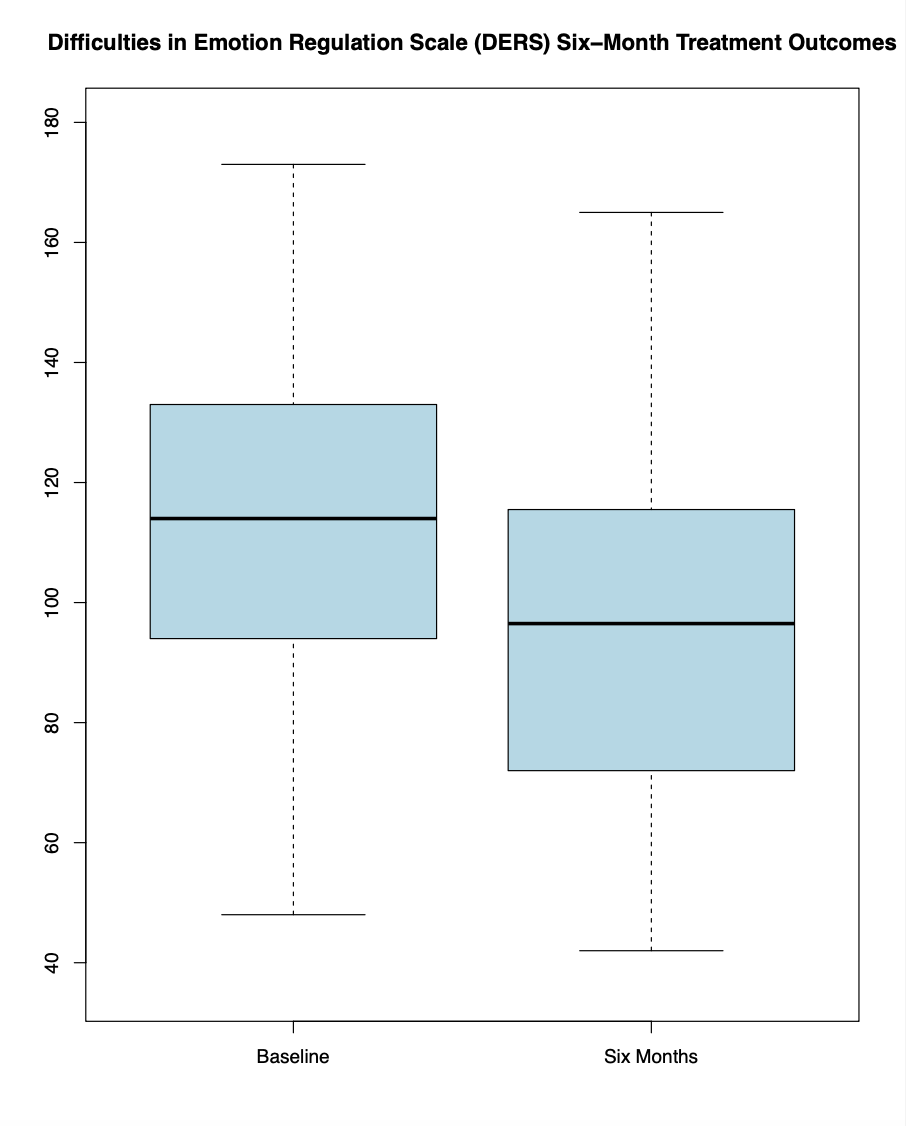
Difficulties in Emotion Regulation Scale (DERS)
Description: The Difficulties in Emotional Regulation Scale (DERS) is a 36-item self-report measure designed to assess multiple aspects of emotion dysregulation. It has been found to be a reliable and valid measure of emotional dysregulation difficulties in both adults and adolescents. The DERS yields a total score as well as scores on six subscales.
Interpretation: Total Scores range from 36-180. Higher scores indicate greater dysregulation.
Summary of Outcomes: Statistically significant improvement (decrease) in total emotion dysregulation difficulties over time. A paired samples t-test was conducted to compare symptoms of difficulties with emotion regulation at the start of treatment and after six months of participation in comprehensive DBT treatment at CDBTI. The t-test indicated that emotional dysregulation (DERS Total Score) significantly improved (decreased) among clients who successfully completed six months of comprehensive DBT; t(78) = 5.99, p < .001. This constitutes a moderately large effect size (d = -0.67).
Borderline Symptom List - 23 Item Version (BSL-23)
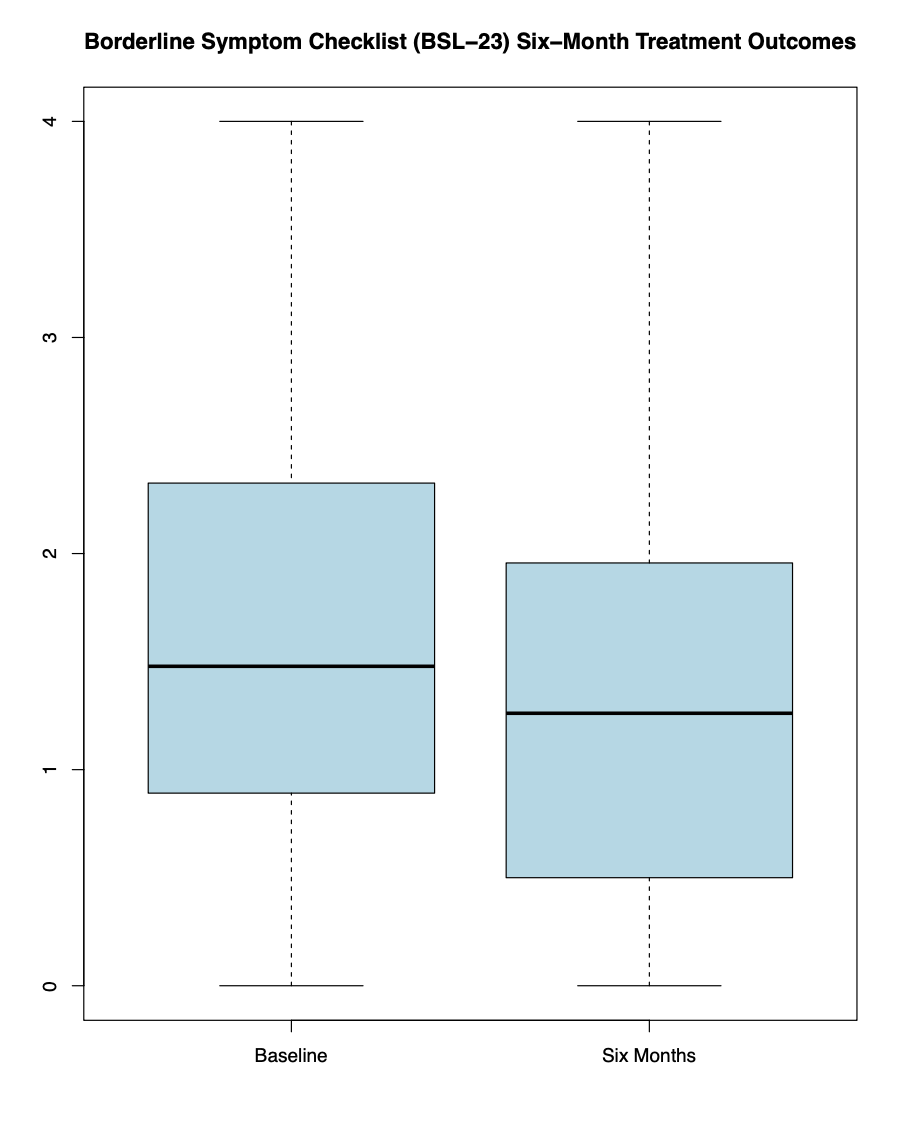
Description: The Borderline Symptom List-23 is a 23-item measure that is a reliable and valid self-report instrument for assessing Borderline Personality Disorder (BPD) severity. Items are rated from 0 (None at all) to 4 (Very strong).
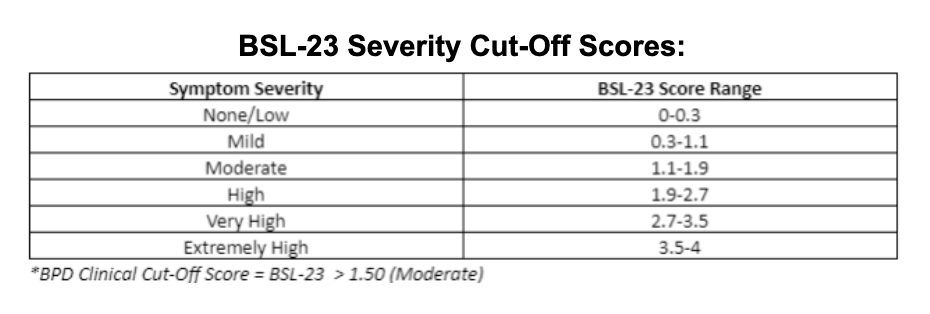
Interpretation: Higher scores indicate greater BPD symptom severity. Scores of 1.50 or higher are consistent with a diagnosis of BPD. This cutoff score discriminates between clients with BPD vs. other psychopathology (Kleindienst et al., 2020).
Summary of Outcomes: Statistically significant improvement (decrease) in BPD symptoms over time. A paired samples t-test was conducted to compare BPD symptoms at the start of treatment and after six months of participation in comprehensive DBT treatment at CDBTI. The t-test indicated that BPD symptoms (BSL-23 Average Score) significantly improved (decreased) among clients who successfully completed six months of comprehensive DBT; t(86) = 3.57, p = .001. This constitutes a small to medium effect size (d = -0.38).
References
Gratz, K.L., Roemer, L. Multidimensional assessment of emotion regulation and dysregulation: development, factor structure, and initial validation of the difficulties in emotion regulation scale. Journal of Psychopathology and Behavioral Assessment, 26, 41–54. https://doi.org/10.1023/B:JOBA.0000007455.08539.94
Kleindienst, N., Jungkunz, M., & Bohus, M. (2020). A proposed severity classification of borderline symptoms using the borderline symptom list (BSL-23). Borderline Personality Disorder and Emotion Dysregulation, 7(1), 11. https://doi.org/10.1186/s40479-020-00126-6